
Best DWDM Muxponders for Data Center Interconnect
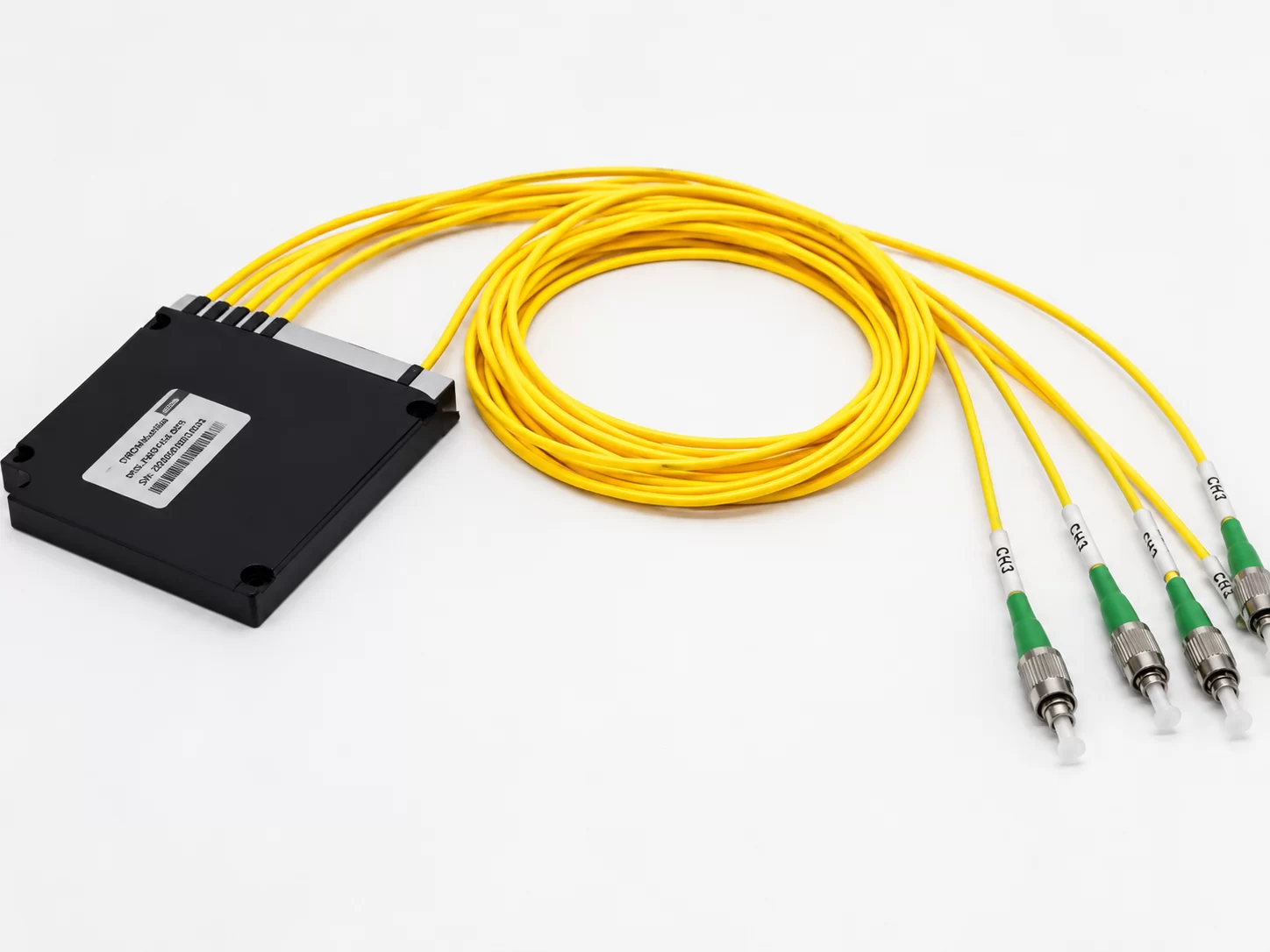
The implementation of DWDM muxponders is a good idea when it comes to interconnecting two data centers. High bandwidth requirements, efficient use of the fiber infrastructure, and reliable long-distance transport are some reasons why this type of solution might be used. The best choice depends on various factors such as distance, client interfaces, capacity, optical characteristics, and integration with the existing infrastructure.
Depending on the deployment scenario, 100G and 400G DWDM muxponders can be considered a good choice for DCIs, while coherent solutions with higher capacity should be evaluated for large cloud facilities and artificial intelligence infrastructure.
What Is a DWDM Muxponder?
DWDM muxponders allow combining several low-speed clients into a single optical channel which is transmitted over the fiber infrastructure. DWDM technology makes possible using several optical wavelengths within a single pair of fibers and increasing the total capacity.
Typically, a DWDM muxponder is connected to the client side switches, routers, or storage equipment. It combines the client traffic and maps it to the DWDM wavelength for further transmission to another data center.
Advantages include:
- Higher utilization of fiber infrastructure since several services can be delivered over the fiber infrastructure
- Flexible capacity depending on the platform and configuration
- Ability to provide long-distance connectivity due to the use of suitable coherent optics and optical line system
- Centralized management by monitoring optical performance, alarms, and service status via management interfaces
- Scalability of the network capacity due to increased traffic by using existing wavelengths and platform capacities
Notably, in case of a short distance, a coherent pluggable transceiver can be an alternative to the muxponder and it can be deployed right in the switch or router.
Best DWDM Muxponder Solutions for DCI
There are no single perfect products for all the data centers and the categories below show some options for specific use cases rather than the rankings.
100G DWDM Muxponder: Best for Moderate Bandwidth Requirements
100G DWDM muxponder is a good solution for enterprise data centers, regional data centers, and for the upgrade of 10G or 25G services.
It combines compatible client ports into the single 100G optical channel. The exact number of client ports depends on the product configuration.
Best suited for:
- Small and medium-sized data centers
- Enterprise data center backup or disaster recovery links
- Connection of regional data centers
- Networks with moderate traffic growth
The key advantage is the affordable entry point to DWDM transport. However, it is also important to estimate if the 100G platform will provide enough capacity during the whole service lifetime.
200G DWDM Muxponder: A Balanced Solution
A 200G muxponder is a balanced solution for those who need more capacity than 100G but do not need 400G. Depending on the platform, it can combine various client interfaces like 100G, 10G, or others. The coherent transmission and FEC ensure the reliable performance of the optical channel.
Best suited for:
- Growing enterprise networks
- Regional cloud infrastructure
- Multi-service transport network
- Upgrade of existing DWDM systems
While choosing 200G platform, it is important to check which client combinations, line-side modulation formats, and optical line system are supported by the platform.
400G DWDM Muxponder: Ideal for High Capacity DCI
400G DWDM muxponder is a good solution for data center networks which are capable to transfer large amount of traffic related to storage, virtualization, cloud, and artificial intelligence.
Depending on the platform configuration, it can combine four 100G clients into the single 400G coherent DWDM channel. Some platforms have native 400GE client interface. The exact configuration depends on the service card and optical module.
Best suited for:
- Large enterprise and cloud data centers
- High capacity data replication
- Storage area network connectivity
- Metropolitan DCI links with growing bandwidth requirements
While evaluating 400G systems, it is important to check if the platform supports the required client interfaces. Moreover, one has to estimate the power consumption, optical reach, and availability of the replacement modules.
800G Muxponder: The Solution for High Density Networks
800G transport can provide higher bandwidth with fewer optical channels for the hyperscale data centers and AI infrastructure. But an 800G muxponder is not always a cost-efficient option. The platform must support the required client interfaces, coherent line-side optics, and the optical fiber infrastructure to support the selected transmission mode. Some platforms allow various line-side configurations but not a single fixed 800G wavelength.
Best suited for:
- Hyperscale cloud infrastructure
- Artificial intelligence and high-performance computing clusters
- Data centers with fast growing inter-site traffic
- Networks with long-term capacity expansion plans
In this category, it is important to give priority to the interoperability and the performance validation rather than the highest bandwidth of the platform.
How to Choose the Best DWDM Muxponder
One should start with real network requirements and not with the highest data rate of the platform.
- Check client-side interfaces
Verify the support of 10GbE, 100GbE, 400GbE or any other required services. In case of the client aggregation, check the supported port combinations and mapping modes. - Estimate optical reach
Check the fiber length, attenuation, losses in connectors, splices, and the number of intermediate components. It is possible that amplification or ROADMs will be required for a longer or more complicated route. Make sure that the complete optical power budget and OSNR requirements are satisfied. - Channel capacity and scalability
Check the supported wavelength grid, channel count, and fiber capacity. Modular platform allows adding new services as it is required but the platform must support the required wavelengths and line rates. - Reliability and management
Look for redundant power supplies, replaceable components, optical performance monitoring, alarms reporting, and suitable management interfaces (SNMP, web-based, etc.).
DWDM Muxponder vs. Coherent Pluggable Optics
One of the key decisions is the choice between dedicated platform or coherent pluggable optics in network devices.
| Consideration | DWDM muxponder | Coherent pluggable optics |
| Deployment | Dedicated transport chassis or service card | Installed in compatible switches or routers |
| Client aggregation | Available on supported models | Depends on host equipment and architecture |
| Management | Transport-layer monitoring and control | Often managed through the host device |
| Best fit | Multi-service transport and flexible optical networks | Simpler DCI links and IP-over-DWDM deployments |
| Expansion | Add cards or wavelengths, subject to platform capacity | Add compatible ports, modules, or wavelengths |
For the simple point-to-point link, coherent pluggable optics is a good choice to decrease the equipment quantity. For the networks requiring multi-client services, optical monitoring and control, or more transport functionality, the dedicated muxponder may be a better solution. The final choice is based on the total system cost and requirements.
Why Choose Huijue Group for Optical Network Equipment?
Huijue Group offers a starting point to explore the communication equipment and optical networking solutions for the organizations working on the build-up or upgrade of the fiber-optic infrastructure.
When evaluating Huijue Group or any other supplier for a DCI project, it is important to check the availability of the required DWDM muxponder configuration, supported client and line-side interfaces, optical reach, management capabilities, and interoperability with the existing equipment.
Moreover, it would be useful to ask about the technical support, warranty, spare parts, and future capacity expansion possibilities. Such information can affect the total cost of ownership.
Conclusion
The best DWDM muxponder for data center interconnect depends on the traffic requirement, transmission distance, existing fiber infrastructure, and future expansion plans.
100G solution can be used for moderate traffic requirements, while 200G and 400G platforms can satisfy more demanding traffic requirements. Hyperscale and AI-oriented facilities can consider 800G-class transport in case of available equipment and fiber infrastructure.
While choosing the platform, it is important to compare all the system requirements and not just the data rates. The good match with DWDM solution can help to increase fiber utilization, provide reliable data center connectivity, and ensure future network growth.